PI (π) Yacht
ID#
144
Build/code name(s):
Project 824
PI (π) Yacht
ID#
144
Build/code name(s):
Project 824
PRIVATE USE ONLY
PRIVATE USE ONLY
Length
100
m
/
328.1
ft
Beam
13.6
m
/
44.7
ft
Volume
2,985
GT
Guests sleeping
14
Cabins
7
Crew members
30
Main Specs
Length
100
m
/
328.1
ft
Beam
13.6
m
/
44.7
ft
Volume
2,985
GT
Guests sleeping
14
Cabins
7
Crew members
30
Estimated value
$300,000,000
Build
Shipyard
Feadship
Year
2025
Hull Type
Mono-Hull
Full displacement
Hull Material
Steel
Superstructure Material
Aluminum
Categories
Build Type
1-of-1 Custom build
Vessel Type
Yacht
Mega yacht
Categories
Build Type
1-of-1 Custom build
Vessel Type
Yacht
Mega yacht
Design
Exterior
Jarkko Jämsén
Main Color
White
Interior
Studio Liaigre
Amenities
Elevator
Swim platform
Tender garage
Spa
Sauna/Steam room/Hammam
Massage room
Gym
Swimming pool
Jacuzzi
Build
Shipyard
Feadship
Year
2025
Hull Type
Mono-Hull
Full displacement
Hull Material
Steel
Superstructure Material
Aluminum
Design
Exterior
Jarkko Jämsén
Main Color
White
Interior
Studio Liaigre
Categories
Build Type
1-of-1 Custom build
Vessel Type
Yacht
Mega yacht
Amenities
Elevator
Swim platform
Tender garage
Spa
Sauna/Steam room/Hammam
Massage room
Gym
Swimming pool
Jacuzzi
Exterior Design
Exterior Design
Exterior Design
Interior Design
Not publicly available.
Interior Design
Not publicly available.
Interior Design
Not publicly available.
Performance
Cruising Speed
16
kn
Max Speed
18
kn
Range
5,500
nm
/
263K
L
(fuel tanks)
Propulsion
Type
Diesel
Motor yacht
Hybrid
Diesel-electric
Horse Power
5,784
HP
Engines info
Performance
Cruising Speed
16
kn
Max Speed
18
kn
Range
5,500
nm
/
263K
L
(fuel tanks)
Propulsion
Type
Diesel
Motor yacht
Hybrid
Diesel-electric
Horse Power
5,784
HP
Engines info
Rumored owner
Howard Schultz
Nationality
American 🇺🇸
Estimated Net Worth
$4B
See ownership history
Rumored owner
Howard Schultz
Nationality
American 🇺🇸
Estimated Net Worth
$4B
See ownership history
Fun Facts
⭐ THE UPGRADE FROM 77m TO 100m:
To understand the 100-meter ”Pi” (π), one must first understand its predecessor. In 2019, Howard Schultz, the owner, took delivery of a 77.25-meter Feadship initially named ”Syzygy 818”. The name ‘Syzygy’ refers to the astronomical alignment of three celestial bodies, while ‘818’ was considered a prosperous number in Chinese numerology, totaling to imply ‘fortune’. Shortly after delivery, Schultz renamed this vessel ”Pi”, referencing the mathematical constant π, a number that is infinite and non-repeating, perhaps symbolizing endless possibilities or the infinite nature of the horizon.
However by 2021, just two years after taking delivery of the 77-meter yacht, Schultz placed an order for a significantly larger 100m vessel.
The 77-meter vessel was subsequently sold and continues to operate, but the name ”Pi” was transferred to the new 100-meter flagship, creating a lineage of vessels bearing the mathematical icon.
His older “Pi” is now called 818, you can also check her out in my database!
☕ STARBUCKS’ BACK STORY:
Born on July 19, 1953, Schultz grew up in the Bayview Houses, a subsidized public housing complex in a working-class neighborhood. His father, Fred Schultz, a diaper service delivery driver, fell on a sheet of ice and broke his ankle and hip. In the 1960s blue-collar economy, this was a catastrophe. Fred had no health insurance, no worker’s compensation and no severance. He was fired, and the family was plunged into destitution. Witnessing his father ‘broken’ and discarded by the system instilled in Howard a fierce resolve to build a different kind of company, one that would treat its employees with the dignity his father was denied. This trauma is the direct origin of Starbucks' comprehensive health coverage and stock options for part-time workers. Schultz escaped Canarsie via sports, earning an athletic scholarship to Northern Michigan University (NMU). Although he traveled there to play football, he did not make the team, yet he stayed to earn a Bachelor of Arts in Communications in 1975.
In 1979, he started working a Swedish manufacturer of drip coffee makers and kitchenware. It was in this capacity, reviewing sales logs in his New York office, that he noticed a statistical anomaly: a small retailer in Seattle named ‘Starbucks Coffee Tea and Spice’ was ordering more plastic cone filters than major department stores. Intrigued, Schultz flew to Seattle in 1981 and lobbied them to hire him. In 1982, he joined Starbucks as the Director of Retail Operations and Marketing.
In 1983, Schultz traveled to Milan, Italy, for a trade show. While walking the streets, he observed the Italian espresso bars. He saw that they were not just selling coffee; they were selling ‘theater’ and ‘community’. The baristas greeted customers by name.
Schultz returned to Seattle fueled by an epiphany: Starbucks shouldn't just sell beans; it should sell the beverage and the experience. The founders rejected this vision. Frustrated but undeterred, Schultz left ‘Starbucks’ in 1985 to found his own coffee chain, ’Il Giornale’.
’ll Giornale’ was the prototype for the modern Starbucks. It played opera music, had standing bars, and used Italian nomenclature. In 1987, the original Starbucks founders decided to sell their retail unit to focus on Peet's Coffee. With the financial backing of investors, including Bill Gates Sr. (yep, the father of the Microsoft founder), Schultz purchased Starbucks for $3.8 million and merged it with ‘Il Giornale’, retaining the Starbucks name.
From 1987 to 2000, Schultz served as CEO, overseeing one of the most aggressive retail expansions in history. He took the company public in 1992. In 2000, believing the company was self-sustaining, Schultz stepped down.
By 2007, Starbucks was in crisis. Rapid expansion had diluted the brand. The introduction of automatic espresso machines (which blocked the customer's view of the barista) and flavor-lock packaging (which removed the aroma of coffee from the stores) had sterilized the Starbucks experience. He came back as CEO to save the situation. In a move that cost the company nearly $6 million in lost revenue, Schultz closed all 7’100 U.S. stores for three hours on a Tuesday afternoon in February 2008. The purpose was to retrain 135’000 baristas on the art of pulling a perfect espresso shot. The turnaround was successful, and Starbucks stock rebounded significantly over the next decade.
At around that same period, in 2008, a desperate Howard Schultz visited Apple headquarters to seek advice from Steve Jobs on how to navigate a corporate turnaround. During a walk around the Cupertino campus, Schultz poured out his heart about the structural problems at Starbucks. Jobs stopped, looked him dead in the eye and screamed: "You go back to Seattle and you fire everyone on your leadership team!" Schultz, stunned, asked, "Who's going to do the work?". Jobs reiterated: "I just told you. Go fire all those people". Schultz didn't listen immediately. Months later, Jobs told him: "You're six months late”. While Schultz didn't pull the trigger immediately, Jobs turned out to be right. Schultz later admitted that within six to nine months of that meeting, almost every member of that original leadership team had left the company or been replaced.
As of 2025, Schultz holds the title of Chairman Emeritus. Though technically retired, his shadow looms large. After his handpicked successor, Laxman Narasimhan, struggled to maintain momentum, the board appointed Brian Niccol (formerly of Chipotle) as CEO in 2024.
🎨 EXTERIOR DESIGN PHILOSOPHY:
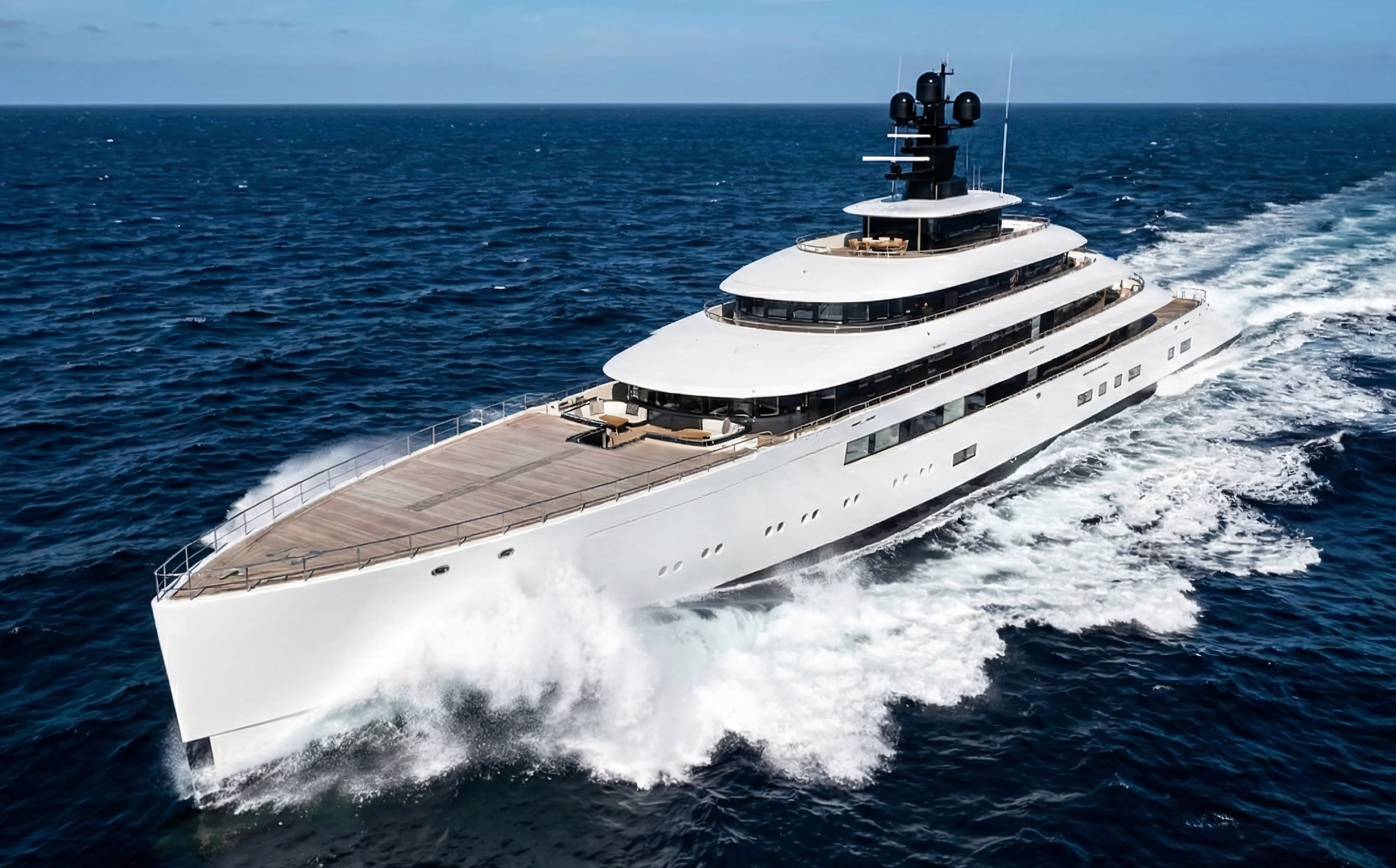
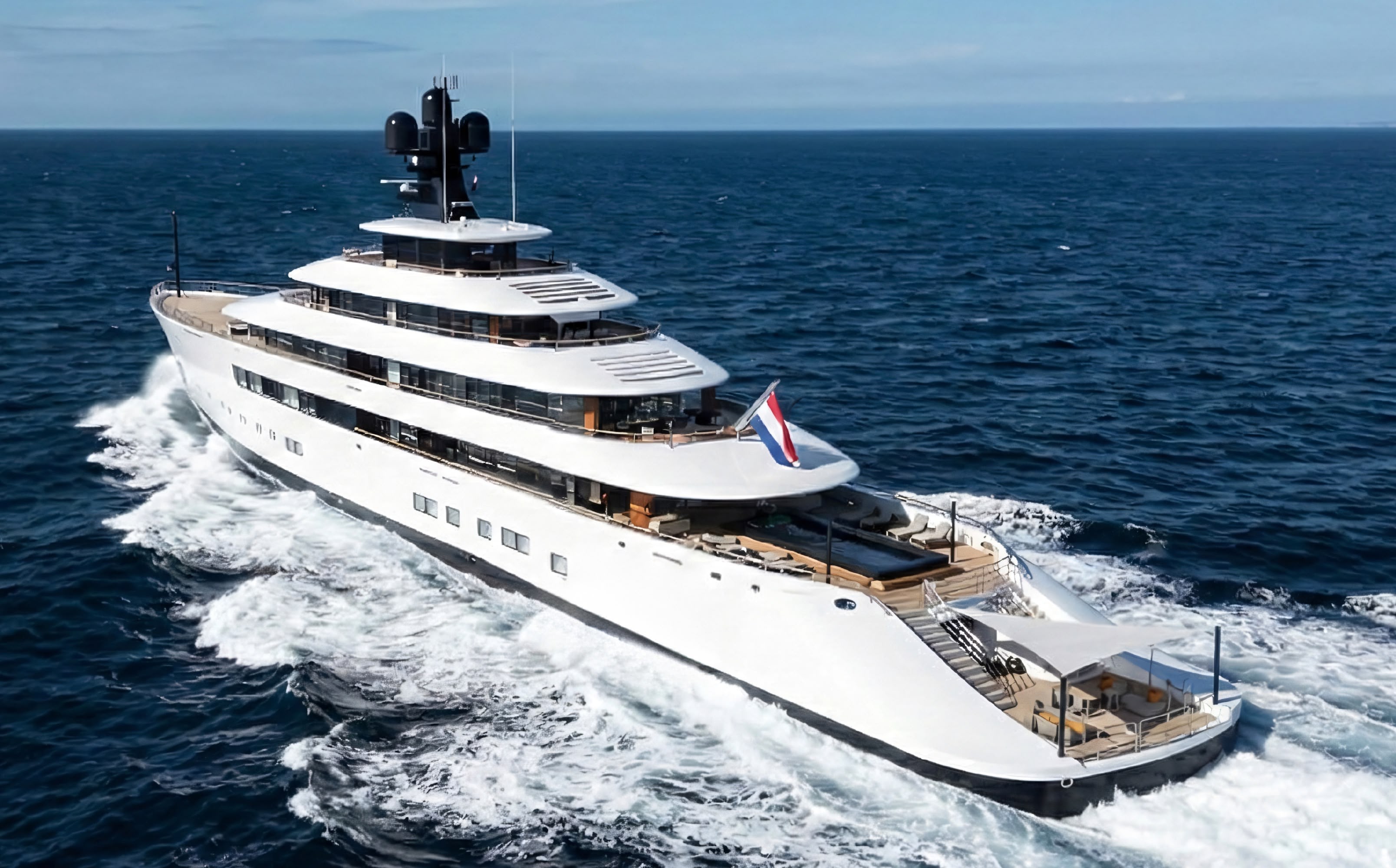
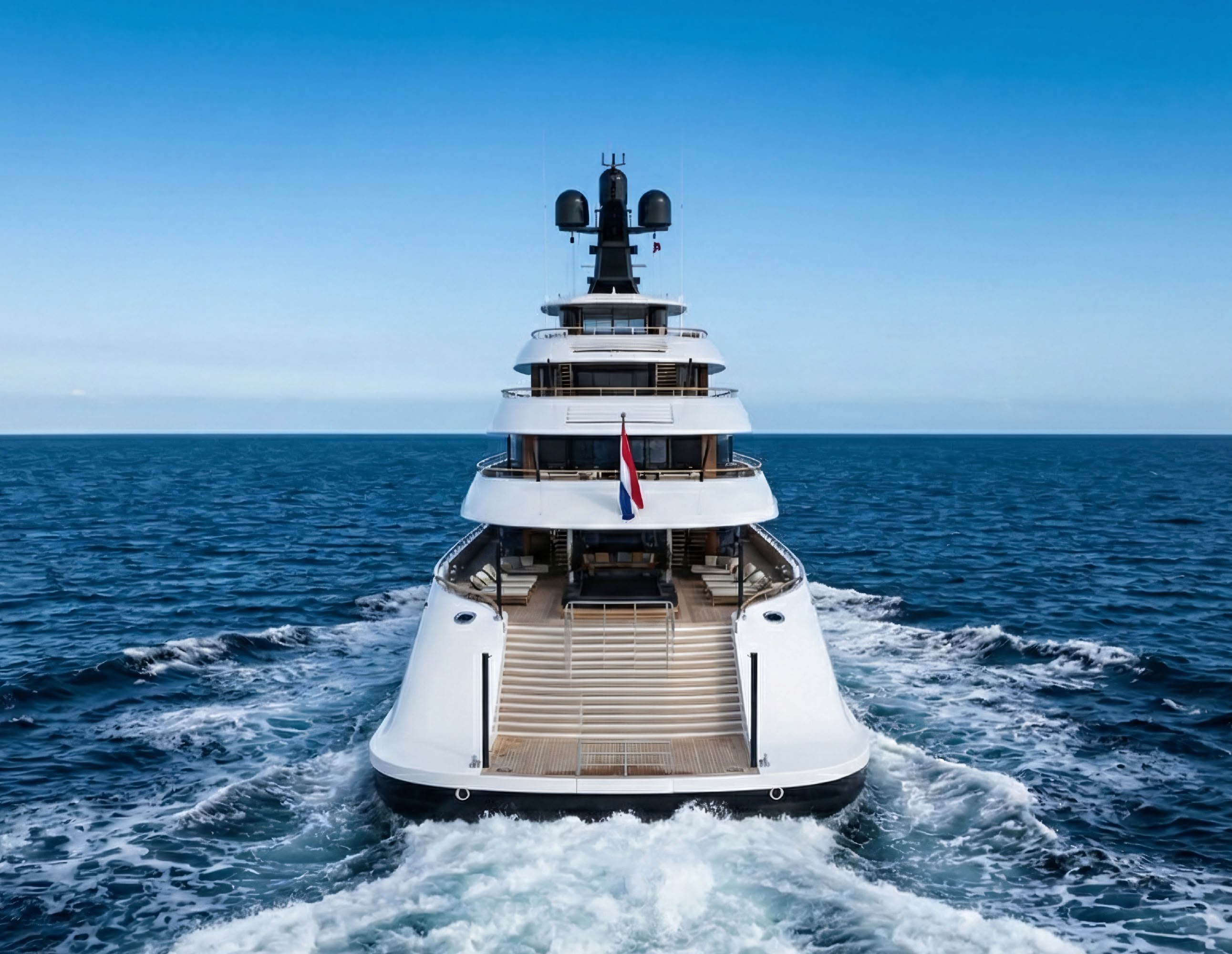
The exterior design of ”Pi” is the work of Finnish designer Jarkko Jämsén of the Aivan studio. Jämsén is known for disrupting the traditional ‘wedding cake’ stacking of yacht decks. For ”Pi”, he employed a philosophy of ‘organic minimalism’ that favors smooth, continuous lines over jagged angles.
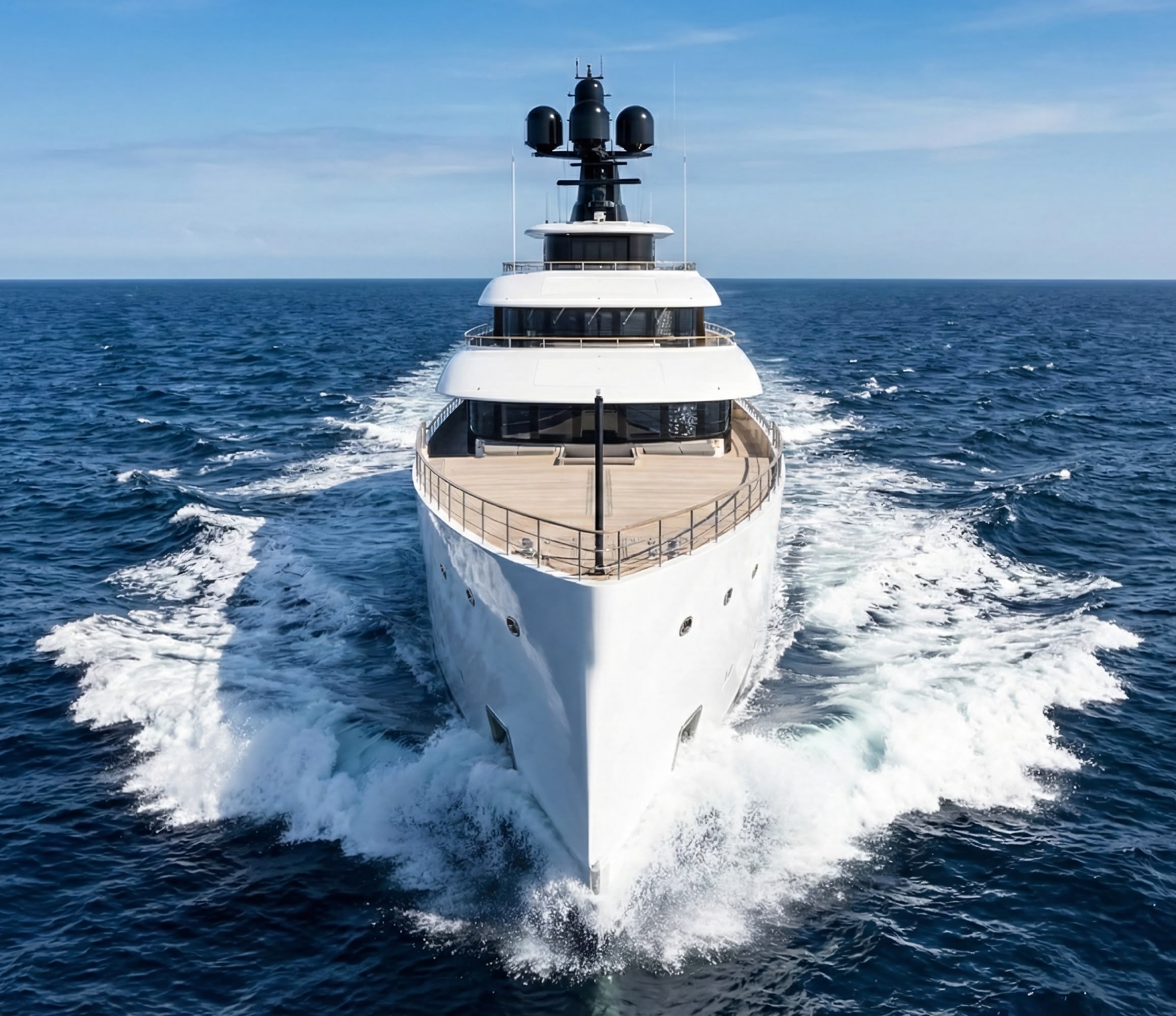
The Plumb Bow: ”Pi” features a near-vertical (plumb) bow. This is not merely an aesthetic choice to look aggressive or modern. It maximizes the waterline length, which in turn improves hydrodynamic efficiency and speed. The bow flares gracefully as it rises, creating a profile that is distinctive and powerful.
The Platypus Silhouette: Some critics and spotters have affectionately dubbed the profile ‘platypus-like’ due to the unique way the bow flares and the superstructure curves. The lines run cleanly from bow to stern, avoiding the visual clutter of radar arches and satellite domes, which are likely recessed or hidden to maintain the sleek profile.
Double-Curvature Glass: The most striking feature of Jämsén’s design is the use of glass. ”Pi” utilizes massive panels of double-curvature glass. These are not flat windows - they curve in two directions (vertically and horizontally) to follow the organic shape of the superstructure. Manufacturing glass of this size and complexity is an engineering nightmare, as it must support structural loads while remaining optically clear. Jämsén has stated: "This vessel has the most amazing windows ever built on a superyacht".
⭐ THE UPGRADE FROM 77m TO 100m:
To understand the 100-meter ”Pi” (π), one must first understand its predecessor. In 2019, Howard Schultz, the owner, took delivery of a 77.25-meter Feadship initially named ”Syzygy 818”. The name ‘Syzygy’ refers to the astronomical alignment of three celestial bodies, while ‘818’ was considered a prosperous number in Chinese numerology, totaling to imply ‘fortune’. Shortly after delivery, Schultz renamed this vessel ”Pi”, referencing the mathematical constant π, a number that is infinite and non-repeating, perhaps symbolizing endless possibilities or the infinite nature of the horizon.
However by 2021, just two years after taking delivery of the 77-meter yacht, Schultz placed an order for a significantly larger 100m vessel.
The 77-meter vessel was subsequently sold and continues to operate, but the name ”Pi” was transferred to the new 100-meter flagship, creating a lineage of vessels bearing the mathematical icon.
His older “Pi” is now called 818, you can also check her out in my database!
🎨 EXTERIOR DESIGN PHILOSOPHY:
The exterior design of ”Pi” is the work of Finnish designer Jarkko Jämsén of the Aivan studio. Jämsén is known for disrupting the traditional ‘wedding cake’ stacking of yacht decks. For ”Pi”, he employed a philosophy of ‘organic minimalism’ that favors smooth, continuous lines over jagged angles.
The Plumb Bow: ”Pi” features a near-vertical (plumb) bow. This is not merely an aesthetic choice to look aggressive or modern. It maximizes the waterline length, which in turn improves hydrodynamic efficiency and speed. The bow flares gracefully as it rises, creating a profile that is distinctive and powerful.
The Platypus Silhouette: Some critics and spotters have affectionately dubbed the profile ‘platypus-like’ due to the unique way the bow flares and the superstructure curves. The lines run cleanly from bow to stern, avoiding the visual clutter of radar arches and satellite domes, which are likely recessed or hidden to maintain the sleek profile.
Double-Curvature Glass: The most striking feature of Jämsén’s design is the use of glass. ”Pi” utilizes massive panels of double-curvature glass. These are not flat windows - they curve in two directions (vertically and horizontally) to follow the organic shape of the superstructure. Manufacturing glass of this size and complexity is an engineering nightmare, as it must support structural loads while remaining optically clear. Jämsén has stated: "This vessel has the most amazing windows ever built on a superyacht".
☕ STARBUCKS’ BACK STORY:
Born on July 19, 1953, Schultz grew up in the Bayview Houses, a subsidized public housing complex in a working-class neighborhood. His father, Fred Schultz, a diaper service delivery driver, fell on a sheet of ice and broke his ankle and hip. In the 1960s blue-collar economy, this was a catastrophe. Fred had no health insurance, no worker’s compensation and no severance. He was fired, and the family was plunged into destitution. Witnessing his father ‘broken’ and discarded by the system instilled in Howard a fierce resolve to build a different kind of company, one that would treat its employees with the dignity his father was denied. This trauma is the direct origin of Starbucks' comprehensive health coverage and stock options for part-time workers. Schultz escaped Canarsie via sports, earning an athletic scholarship to Northern Michigan University (NMU). Although he traveled there to play football, he did not make the team, yet he stayed to earn a Bachelor of Arts in Communications in 1975.
In 1979, he started working a Swedish manufacturer of drip coffee makers and kitchenware. It was in this capacity, reviewing sales logs in his New York office, that he noticed a statistical anomaly: a small retailer in Seattle named ‘Starbucks Coffee Tea and Spice’ was ordering more plastic cone filters than major department stores. Intrigued, Schultz flew to Seattle in 1981 and lobbied them to hire him. In 1982, he joined Starbucks as the Director of Retail Operations and Marketing.
In 1983, Schultz traveled to Milan, Italy, for a trade show. While walking the streets, he observed the Italian espresso bars. He saw that they were not just selling coffee; they were selling ‘theater’ and ‘community’. The baristas greeted customers by name.
Schultz returned to Seattle fueled by an epiphany: Starbucks shouldn't just sell beans; it should sell the beverage and the experience. The founders rejected this vision. Frustrated but undeterred, Schultz left ‘Starbucks’ in 1985 to found his own coffee chain, ’Il Giornale’.
’ll Giornale’ was the prototype for the modern Starbucks. It played opera music, had standing bars, and used Italian nomenclature. In 1987, the original Starbucks founders decided to sell their retail unit to focus on Peet's Coffee. With the financial backing of investors, including Bill Gates Sr. (yep, the father of the Microsoft founder), Schultz purchased Starbucks for $3.8 million and merged it with ‘Il Giornale’, retaining the Starbucks name.
From 1987 to 2000, Schultz served as CEO, overseeing one of the most aggressive retail expansions in history. He took the company public in 1992. In 2000, believing the company was self-sustaining, Schultz stepped down.
By 2007, Starbucks was in crisis. Rapid expansion had diluted the brand. The introduction of automatic espresso machines (which blocked the customer's view of the barista) and flavor-lock packaging (which removed the aroma of coffee from the stores) had sterilized the Starbucks experience. He came back as CEO to save the situation. In a move that cost the company nearly $6 million in lost revenue, Schultz closed all 7’100 U.S. stores for three hours on a Tuesday afternoon in February 2008. The purpose was to retrain 135’000 baristas on the art of pulling a perfect espresso shot. The turnaround was successful, and Starbucks stock rebounded significantly over the next decade.
At around that same period, in 2008, a desperate Howard Schultz visited Apple headquarters to seek advice from Steve Jobs on how to navigate a corporate turnaround. During a walk around the Cupertino campus, Schultz poured out his heart about the structural problems at Starbucks. Jobs stopped, looked him dead in the eye and screamed: "You go back to Seattle and you fire everyone on your leadership team!" Schultz, stunned, asked, "Who's going to do the work?". Jobs reiterated: "I just told you. Go fire all those people". Schultz didn't listen immediately. Months later, Jobs told him: "You're six months late”. While Schultz didn't pull the trigger immediately, Jobs turned out to be right. Schultz later admitted that within six to nine months of that meeting, almost every member of that original leadership team had left the company or been replaced.
As of 2025, Schultz holds the title of Chairman Emeritus. Though technically retired, his shadow looms large. After his handpicked successor, Laxman Narasimhan, struggled to maintain momentum, the board appointed Brian Niccol (formerly of Chipotle) as CEO in 2024.
All media not captured by this website remain the sole property of their respective owners, as credited. No licenses, copyrights, or other usage rights are granted to users of this site. All rights are reserved by the original creators.
Majority of the pictures displayed on this website are AI-generated illustrations used for visual representation purposes only. Not real pictures, unless explicitly stated otherwise. The appearance of the actual yacht may differ from those shown in the illustrations.
This page is provided for general informational purposes only and does not constitute a formal listing for sale or charter. I am not the manager, owner, nor representative of this vessel. While the data provided is gathered from publicly available sources, I cannot guarantee that all information is accurate, complete, or up to date at all times.
All media not captured by this website remain the sole property of their respective owners, as credited. No licenses, copyrights, or other usage rights are granted to users of this site. All rights are reserved by the original creators.
Majority of the pictures displayed on this website are AI-generated illustrations used for visual representation purposes only. Not real pictures, unless explicitly stated otherwise. The appearance of the actual yacht may differ from those shown in the illustrations.
This page is provided for general informational purposes only and does not constitute a formal listing for sale or charter. I am not the manager, owner, nor representative of this vessel. While the data provided is gathered from publicly available sources, I cannot guarantee that all information is accurate, complete, or up to date at all times.

The Yacht Info
Copyright © 2026 The Yacht Info
All rights reserved
The Yacht Info
Copyright © 2026 The Yacht Info
All rights reserved